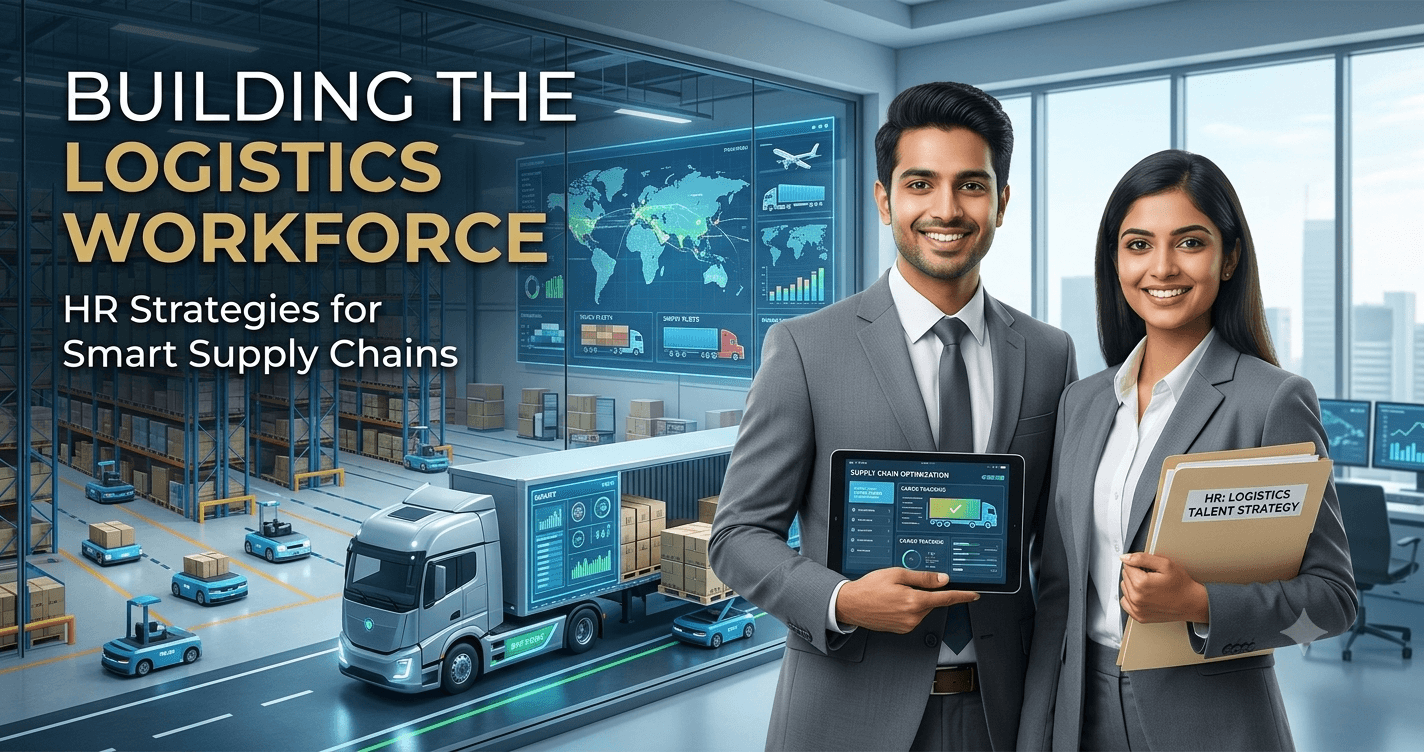
What is Logistics? A Simple Guide for Beginners
Learn logistics management, supply chain operations, inventory control, warehousing, and transportation management. Build a successful career in logistics.
EXATECH Faculty
June 24, 2026
Introduction
Every day, millions of products move across India. Vegetables go from farms to cities. Medicines go from factories to hospitals. Mobile phones go from warehouses to your doorstep.
Who makes all this happen? Logistics professionals.
If you are new to this field, this short blog will help you understand what logistics really means.
What is Logistics in Simple Words?
Logistics is the process of moving and storing goods from one place to another.
It answers three simple questions:
- Where is the product coming from?
- Where does it need to go?
- What is the best way to get it there?
What Does a Logistics Person Do?
A logistics professional handles many small but important tasks. Here are the main ones:
- Deciding whether to use a truck, train, plane, or ship
- Making sure the right quantity is loaded
- Checking that products are not damaged during transport
- Tracking shipments until they reach the customer
- Managing warehouse storage so nothing gets lost
Why is Logistics Important?
Without logistics, businesses cannot run.
Think about these examples:
- A hospital cannot wait three days for emergency medicines
- A vegetable seller cannot sell rotten tomatoes
- An online store cannot survive if orders arrive after one month
Good logistics saves time, reduces cost, and keeps customers happy.
Real Life Example You Already Know
When you order a ₹500 product from Amazon or Flipkart, you get it in two or three days. The delivery charge is often zero or very low.
How is that possible?
Because logistics companies plan everything carefully. They store products close to customers. They use software to find the shortest route. They train delivery partners to work fast.
That is the power of logistics.
What You Will Learn at Oru Learning Hub
Our Logistics and Supply Chain Management course is made for beginners. You do not need any previous experience.
What we cover:
- Basics of road, rail, air, and sea transport
- Warehouse management and inventory control
- How to track shipments using software
- Import and export document basics
- Real projects using simple logistics tools
Learn Logistics Management with Exatech Learning Hub
At Exatech Learning Hub, we offer industry-focused training designed to prepare learners for successful careers in logistics and supply chain management. Our Logistics Management Course combines theoretical knowledge with practical applications in transportation, warehousing, inventory management, and global trade operations.
Students gain the skills needed to confidently pursue opportunities in one of the world's most essential industries.
Contact Us
📞 Phone: 97473 36655
📧 Email: exatech.hr@gmail.com
🌐 Website: www.exatechlearninghub.com
Conclusion
Logistics Management is a dynamic and rewarding career path that offers excellent opportunities for growth and professional development. As businesses continue to expand globally, skilled logistics professionals remain essential for maintaining efficient operations and delivering customer satisfaction.
Start your journey toward a successful career in logistics and supply chain management with the right training and practical knowledge.
Frequently Asked Questions
What is Logistics Management?
Logistics Management involves planning, coordinating, and controlling the movement, storage, and distribution of goods and services within a supply chain.
Is Logistics Management a good career?
Yes. Logistics offers strong job demand, global career opportunities, competitive salaries, and excellent growth potential.
Who can join a Logistics Management Course?
Students, graduates, job seekers, working professionals, and business owners can enroll depending on course eligibility.
What jobs can I get after completing a Logistics Management Course?
You can work as a Logistics Coordinator, Supply Chain Executive, Warehouse Manager, Procurement Executive, Freight Operations Executive, or Logistics Analyst.