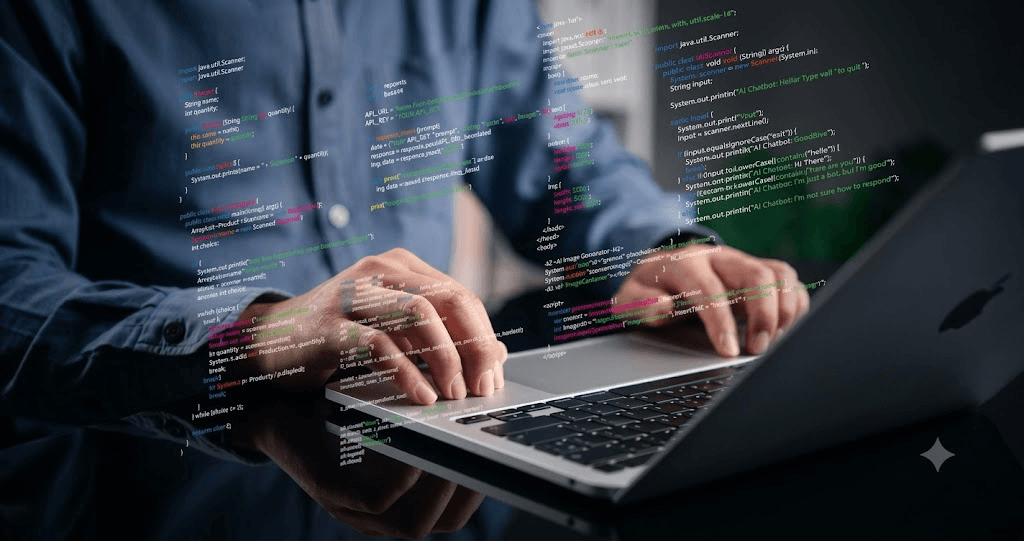
Diploma in Software Programming in Trivandrum | From Coding Basics to Career Ready Skills
Learn Diploma in Software Programming in Trivandrum with practical coding, databases, web development, projects, flexible timings and career guidance.
EXATECH Faculty
September 18, 2026
Software is at the heart of almost every modern business. From websites and mobile applications to business systems and cloud-based platforms, organizations depend on software to work efficiently and serve their customers.
For students and beginners who want to enter the technology industry, learning software programming can provide a strong foundation in coding, problem-solving, databases, application development and software practices.
A Diploma in Software Programming in Trivandrum can help learners build practical technical skills and understand how software is planned, developed, tested and maintained.
At Exatech Learning Hub, the focus can be on developing practical knowledge alongside programming concepts, helping learners understand how coding skills are applied to real-world software development tasks.
Why Software Programming Is an Important Career Skill?
Technology is no longer limited to IT companies. Businesses in healthcare, education, banking, retail, logistics, travel, finance and many other industries use software every day.
This creates a need for professionals who understand how software applications work and how to develop, maintain and improve digital solutions.
Learning software programming can help you develop skills such as:
- Writing and understanding computer programs
- Logical and analytical thinking
- Problem-solving
- Database handling
- Application development
- Debugging and testing
- Web programming
- Software development practices
- Working with development tools
- Building practical software projects
What Does a Software Programmer Actually Do?
A software programmer works with code to create, modify, test and maintain software applications.
A typical development process may look like this:
Understand → Plan → Code → Test → Debug → Improve → Deploy → Maintain
For example, imagine a small business needs an employee management application.
A programmer may need to:
- Understand the business requirement
- Plan the application structure
- Design the required database
- Write the program
- Connect the application with the database
- Test different functions
- Identify and fix errors
- Improve the application's performance
- Maintain the application after development
What Will You Learn in a Diploma in Software Programming?
A software programming diploma can introduce learners to the major building blocks of software development.
Programming Fundamentals
Students can begin with fundamental programming concepts such as:
- Variables and data types
- Operators
- Input and output
- Conditional statements
- Loops
- Functions
- Arrays and collections
- Basic algorithms
Error handling
Object-Oriented Programming
Object-oriented programming introduces a structured approach to software development.
Important concepts may include:
- Classes and objects
- Encapsulation
- Inheritance
- Polymorphism
- Abstraction
- Constructors
- Methods
Understanding these concepts can help learners work with larger and more organized applications.
Database Programming
Most business applications need to store and retrieve information.
Database-related learning may include:
- Database concepts
- Tables and relationships
- SQL
- Queries
- Insert, update and delete operations
- Data retrieval
- Database connectivity
Web Programming and Application Development
Web applications are an important part of today's digital environment.
Depending on the curriculum, learners may be introduced to areas such as:
- HTML
- CSS
- JavaScript
- Front-end development
- Back-end programming concepts
- Database integration
- Forms and validation
- Web application structure
- API concepts
For example, a student project could involve creating a basic registration system.
The project may require:
Registration Form → Validation → Database → Login → User Dashboard
Building such projects helps learners understand how different programming concepts work together.
Software Development Tools and Practices
Professional programming involves more than writing code.
Students should also become familiar with the tools and practices used during software development.
These may include:
Code Editors & IDEs
Tools that help programmers write, organize and debug code.
Version Control
Version-control concepts help developers manage changes to software projects and collaborate with other developers.
Debugging
Debugging involves identifying the cause of errors and correcting them.
Testing
Testing helps verify whether an application behaves as expected.
Documentation
Good documentation makes software easier to understand, maintain and improve.
Practical Projects That Can Build Your Portfolio
A strong programming portfolio can demonstrate what you are capable of building.
Students can practise by developing projects such as:
Student Management System
Manage student information, courses, attendance or records.
Inventory Management System
Track products, stock levels and transactions.
Employee Management System
Maintain employee details and basic HR information.
Billing Application
Create invoices and maintain customer transaction records.
Library Management System
Manage books, members, borrowing and returns.
Simple E-Commerce Application
Develop basic product listings, user accounts and order functionality.
Career Pathways After Software Programming Training
Software programming skills can support progression into several technology-related roles.
Depending on your skills, qualifications, experience and employer requirements, possible career areas include:
- Junior Software Developer
- Software Programmer
- Web Developer
- Junior Application Developer
- Front-End Developer
- Back-End Development Trainee
- Software Testing Trainee
- Database Support Executive
- Technical Support Executive
- Application Support Executive
A diploma is generally a starting point. Continued learning, projects and practical experience can help learners develop toward more specialized technology roles.
Software Programming Across Different Industries
Software professionals are needed across many sectors.
Healthcare
Hospital management systems, appointment platforms and patient information systems.
Banking & Finance
Financial applications, customer portals and transaction systems.
Education
Learning platforms, student management systems and online assessment applications.
Retail
Billing systems, inventory applications and e-commerce platforms.
Logistics
Tracking systems, warehouse applications and delivery management software.
Travel & Hospitality
Booking systems, customer management applications and travel platforms.
Business Services
CRM systems, accounting applications, HR software and internal business tools.
Build Your Career Through Projects, Not Just Certificates
A certificate can document your training, but practical ability is also important when developing a technology career.
A useful learning journey can be:
Learn Concepts
↓
Write Small Programs
↓
Solve Coding Problems
↓
Build Mini Projects
↓
Create Larger Applications
↓
Develop a Portfolio
↓
Prepare for Career Opportunities
For beginners, consistently practising programming can be more valuable than trying to learn everything at once.
You Can Study Software Programming While Working
Many learners have existing academic, personal or professional commitments.
Flexible class timings can make it easier for students and working learners to plan their training around their schedules.
Depending on availability and eligibility, learners may also seek suitable Part Time Job Opportunities while studying. Such opportunities should be considered separately from course admission and may vary according to employer requirements and availability.
The important goal is to balance:
Learning + Practice + Projects + Career Preparation
Your Software Programming Learning Roadmap
A simple roadmap for a beginner can look like this:
Stage 1 — Programming Foundation
Learn syntax, variables, conditions, loops and functions.
Stage 2 — Structured Programming
Understand data structures, reusable code and problem-solving techniques.
Stage 3 — Object-Oriented Programming
Learn classes, objects and reusable software components.
Stage 4 — Database Skills
Understand SQL, databases and application data.
Stage 5 — Web/Application Development
Learn how programming concepts are used to build applications.
Stage 6 — Testing & Debugging
Learn to identify and resolve programming errors.
Stage 7 — Project Development
Build practical applications that demonstrate your skills.
Stage 8 — Career Preparation
Create a portfolio, improve technical communication and prepare for elevant entry-level opportunities.
Start Building Your Software Career
Learning software programming is a journey that combines coding knowledge, logical thinking, practical projects and continuous learning.
If you are looking for a Diploma in Software Programming in Trivandrum, choose a learning path that gives you opportunities to practise programming, work on projects and understand how software development is applied in real-world environments.
With consistent practice and continued skill development, your first programming course can become the foundation for a longer journey in the technology industry.
Enrol in a Diploma in Software Programming at Exatech Learning Hub
Build practical programming skills. Work on projects. Develop your technical foundation. Prepare for your next career step.